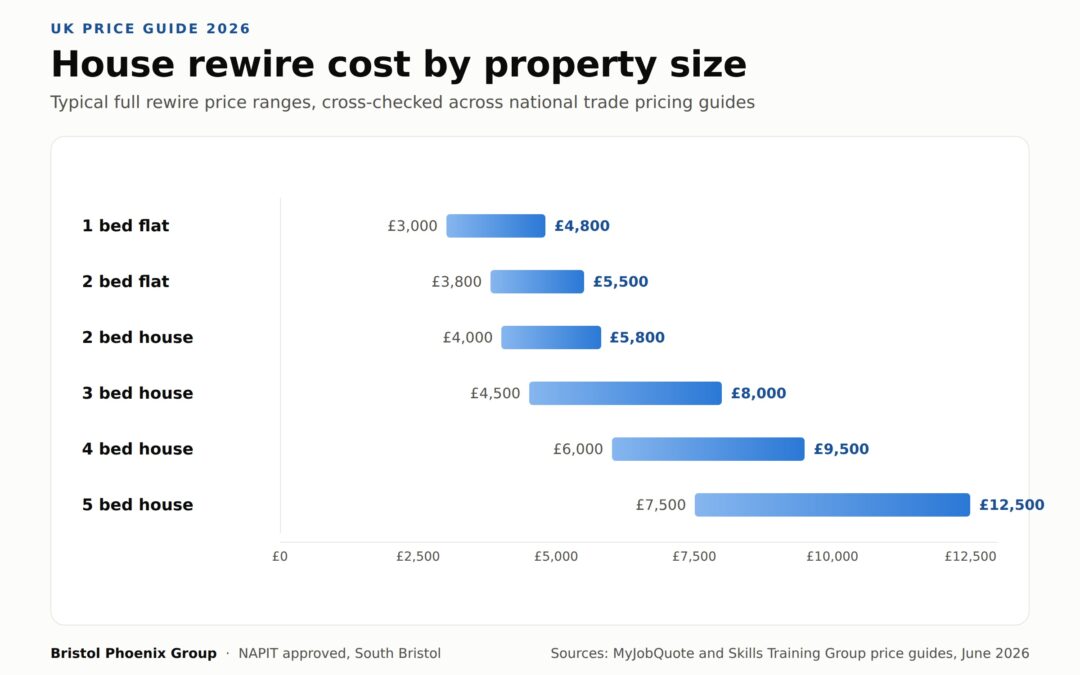
Rewiring is the home improvement nobody photographs. It is buried in walls, hidden under floorboards and boxed in above ceilings, and it is priced with a spread wide enough to make anyone suspicious. Ask about house rewire cost in 2026 and you will hear anything from £3,000 to well past £12,000, sometimes for two houses on the same street. That spread is not electricians plucking numbers from the air. It reflects real differences in property size, construction, condition and spec. In this guide we will set out the realistic cost to rewire a house in the UK by property size, explain exactly what pushes a quote up or down, and show why the smartest route to a rewire often starts with a test costing a couple of hundred pounds rather than a five figure leap of faith.
Table of Contents
- House Rewire Cost at a Glance
- What a Full Rewire Actually Includes
- What Pushes a House Rewire Cost Up or Down
- Full Rewire or Partial Rewire
- How Long a Rewire Takes and Living Through One
- Why Old Wiring Is Worth Taking Seriously
- Why an EICR First Can Save You Money
- The Paperwork: Part P, Certificates and Sign Off
- A Worked Example: Rewiring a Three Bed Terrace
- How to Keep the Cost Down Without Cutting Corners
- Rewiring in Bristol: What to Do Next
TL;DR
- Most full rewires in the UK in 2026 cost between roughly £3,000 for a small flat and £12,500 for a large five bed house, based on current national price guides.
- A typical three bed house sits in the £4,500 to £8,000 bracket, and most quotes cluster between £5,500 and £6,500.
- Labour is the biggest single cost. Electricians charge roughly £200 to £400 a day, and a three bed rewire usually takes 5 to 10 working days.
- The same house can be quoted £1,500 apart depending on whether it is empty or occupied, how the walls are built, and how many sockets and lights you want at the end.
- A full rewire is notifiable work under Part P of the Building Regulations in England, so it must be certified, either through building control or by a registered installer.
- An EICR costing £80 to £350 will tell you whether you actually need a full rewire at all. Plenty of older installations pass with minor remedials.
House Rewire Cost at a Glance
The table below reflects what the main UK trade pricing guides report in 2026. We have cross-checked the ranges against national sources including MyJobQuote and the Skills Training Group, and they line up with what we quote around Bristol week to week.
| Property type | Typical full rewire cost | Typical duration |
|---|---|---|
| 1 bedroom flat | £3,000 to £4,800 | 4 to 7 days |
| 2 bedroom flat | £3,800 to £5,500 | 4 to 7 days |
| 2 bedroom house | £4,000 to £5,800 | 5 to 8 days |
| 3 bedroom house | £4,500 to £8,000 | 5 to 10 days |
| 4 bedroom house | £6,000 to £9,500 | Up to 2 weeks |
| 5 bedroom house | £7,500 to £12,500 | 10 to 15 days |
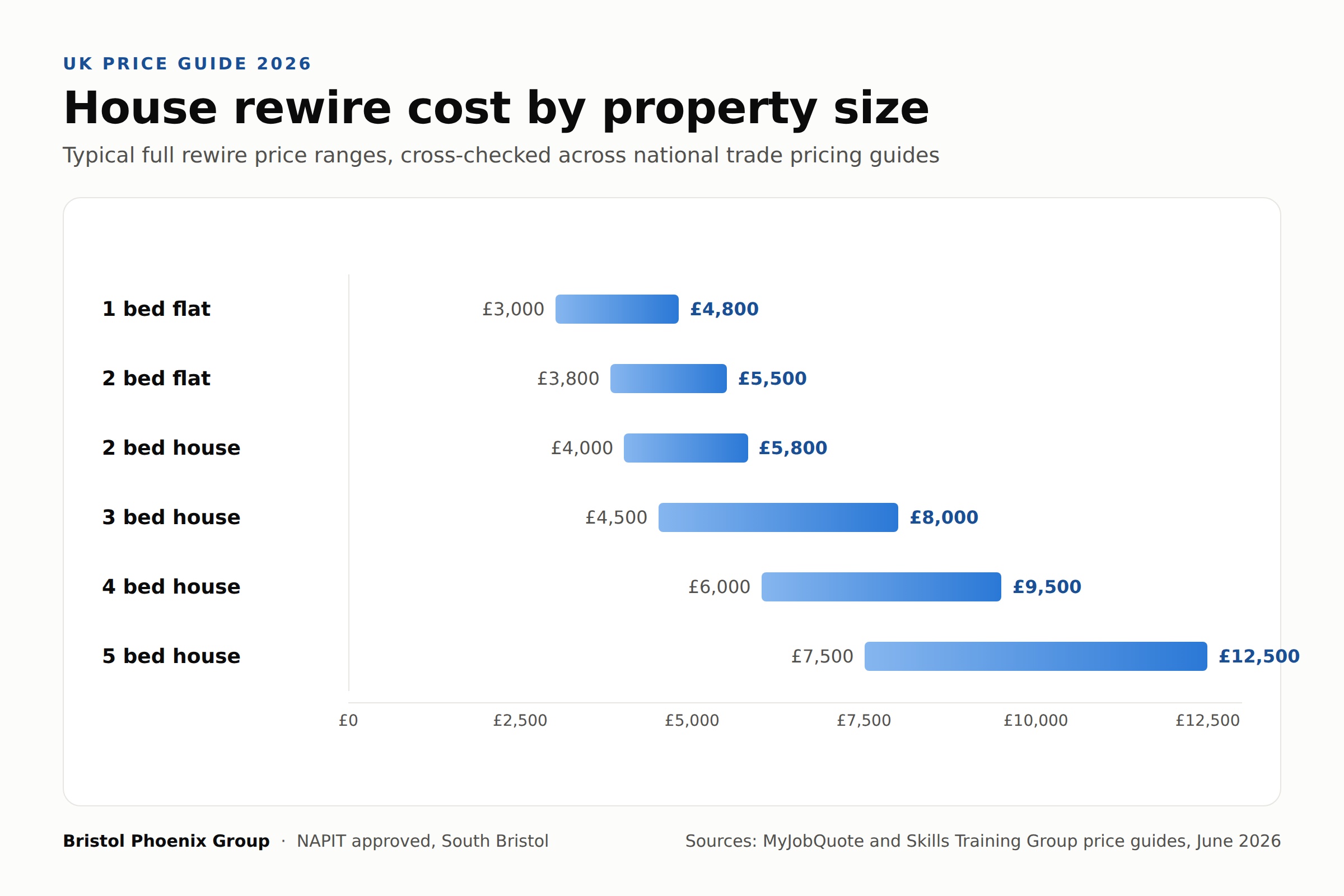
Those figures cover a complete rewire: all new cabling, new accessories, a new consumer unit and full certification. They assume a straightforward property. A listed building, a house with concrete floors throughout, or a home stuffed with fitted furniture will push past the top of the range, and we will explain why below.
What a Full Rewire Actually Includes
A full rewire replaces every circuit in the property. That means new cable runs to every socket, switch, light fitting and fixed appliance, new back boxes where needed, and a modern consumer unit with RCD protection at the heart of it. It is a two stage job.
First fix is the disruptive part. Floorboards come up, chases are cut into walls, and the new cables are routed around the house. Second fix happens once the making good is under way: faceplates, light fittings and the consumer unit go on, then every circuit is tested and the certification is issued.
A proper quote should include the consumer unit, all accessories, testing and the Building Regulations paperwork. What it usually excludes is redecorating. Wiring does not care about paint, so chases are filled but not skimmed to a decorator’s finish, and you should budget separately for making good. If a quote is vague about what happens to your walls afterwards, ask. It is the single most common source of rewire disappointment.
What Pushes a House Rewire Cost Up or Down
Two three bed houses can sit £2,000 apart on price for perfectly sensible reasons. These are the levers that matter.
Size and circuit count
More rooms means more cable, more accessories and more days on site. Pricing guides suggest each additional bedroom adds roughly £600 to £1,000 to the bill. But circuit count matters more than bedrooms alone: a three bed with an electric shower, an EV charger, outside power and a garden office rewires like a four bed.
Construction and finishes
Chasing solid brick is slower than dropping cables through stud walls. Concrete floors force longer routes or surface containment. Lath and plaster ceilings, common in Bristol’s Victorian stock, need careful handling unless you enjoy replastering entire rooms. High spec finishes cut both ways too: nobody wants to chase through a £4,000 tiled bathroom, so routes get longer and slower.
Occupied or empty
An empty house rewires fastest and cheapest. Furniture, carpets and daily life all slow the job down, and slower means dearer. Rewiring around a family in residence can add days to the schedule, which is why so many rewires happen between tenancies or before moving in.
The spec you choose
A like for like replacement is the baseline. Every extra double socket, bank of downlights, outside light or data point adds labour and materials. This is also the cheapest moment you will ever have to add them, since the walls are already open. Decide the spec before quotes are gathered, not during the job.
Where you live
Regional labour rates move the whole range. National guides put London and the South East at a 20 to 30 percent premium over the national average. Bristol sits closer to the middle of the pack, which is some comfort, although day rates here have crept up like everywhere else. Across the UK, electricians typically charge £200 to £400 a day.
Full Rewire or Partial Rewire
Not every property needs the full works. If the cabling is sound but one area is tired, a partial rewire can make sense: a single room typically costs £300 to £800 and a kitchen £500 to £1,500, according to current national pricing. Partial rewiring is common where an extension or refurbishment touches only part of the house.
The honest caveat is that partial rewires only pay off when the rest of the installation is genuinely healthy. Splicing new circuits into degraded rubber or early PVC cabling is false economy, and any electrician who tests the whole installation first will tell you the same. If your house still has old wiring colours, a fuse box with rewirable fuses, or sockets that predate the Beatles’ back catalogue, price the full rewire before committing money to a partial one. Our rewiring service covers both, and we would far rather scope it properly than sell you the wrong one.
How Long a Rewire Takes and Living Through One
National guides put a full rewire at anywhere from 4 days for a small flat to 15 days for a large house, with a three bed usually taking 5 to 10 working days. The spread depends on the same factors that drive price: construction, occupancy and spec.
Living through one is doable but not glamorous. Expect rooms out of action in sequence, floorboards up, dust in places dust has no business being, and planned power downtime while circuits are switched over. A good contractor will keep essential circuits running overnight, sheet up room by room, and agree the sequence with you in advance. If you can decant for even the first fix week, the job runs faster and the final bill usually reflects it.
Why Old Wiring Is Worth Taking Seriously
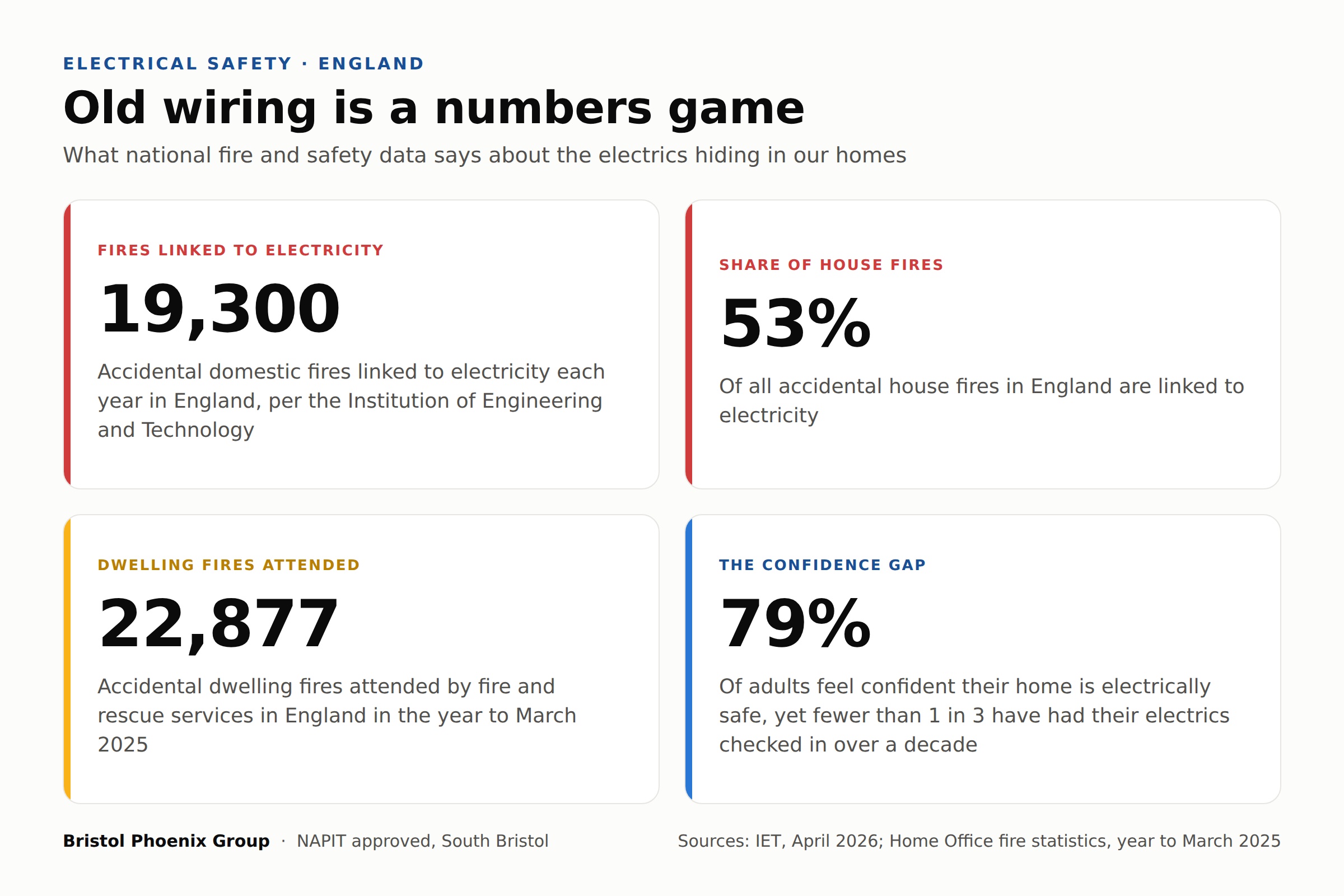
A rewire is easy to postpone because failing wiring rarely announces itself politely. The national numbers explain why waiting is a gamble. Fire services attended 22,877 accidental dwelling fires in England in the year to March 2025, according to Home Office fire statistics. And the Institution of Engineering and Technology reports around 19,300 accidental domestic fires linked to electricity each year, about 53 percent of all accidental house fires in England.
The same IET research found a striking confidence gap: 79 percent of adults feel confident about the electrical safety of their homes, yet fewer than a third have had their electrics checked by a qualified electrician in over a decade, and one in five did not know checks were needed at all. Confidence, unfortunately, is not a test instrument.
Why an EICR First Can Save You Money
Here is the part of the conversation that surprises people: we talk a fair number of callers out of immediate rewires. The right first step for an older installation is an Electrical Installation Condition Report, the formal inspection we cover in our guide to what an EICR is. A domestic EICR typically costs £80 to £350 depending on property size.
The report grades every issue it finds. If the installation is fundamentally sound, you may only need targeted remedial work costing hundreds rather than thousands. If it is not, the report gives you an itemised, prioritised case for the rewire, which is exactly what you want in hand when comparing quotes. Either way, spending a couple of hundred pounds on proper testing before committing to a five figure job is the cheapest decision insurance available. For landlords in England, who already need an EICR at least every five years, the report doubles as the planning document for phasing any rewiring work between tenancies.
The Paperwork: Part P, Certificates and Sign Off
A full rewire is not a job that lives outside the rules. In England, electrical work in dwellings falls under Part P of the Building Regulations, and notifiable work includes the installation of a new circuit and the replacement of a consumer unit. A rewire involves both, many times over.
You have two compliant routes. Either the work is notified to building control, with fees to match, or it is carried out by an installer registered with a government authorised competent person scheme, who self-certifies the work, issues a BS 7671 electrical installation certificate, and arranges the Building Regulations compliance certificate afterwards. As a NAPIT registered contractor, Bristol Phoenix Group takes the second route on every rewire, which means the certification is included rather than an extra line on your bill.
Do not treat the paperwork as optional. When you sell, conveyancers ask for it. When you claim, insurers ask for it. A rewire without certification is a rewire you may end up paying for twice.
A Worked Example: Rewiring a Three Bed Terrace
Picture a typical three bed Victorian terrace in south Bristol: solid brick walls, suspended timber floors, one bathroom, a kitchen extension from the 1990s, and a fuse board old enough to vote. The owners are moving in shortly and the house is empty, which is the ideal window. A realistic quote might break down like this.
| Element | Indicative cost |
|---|---|
| Labour: two electricians, 6 days on site | £3,600 |
| Cable, back boxes, containment and sundries | £950 |
| Accessories: sockets, switches, light fittings allowance | £650 |
| New consumer unit with RCD protection | £450 |
| Testing, certification and Building Regulations sign off | £350 |
| Total | £6,000 |
That lands comfortably inside the national £4,500 to £8,000 bracket for a three bed. Now change one assumption. Make the house occupied and furnished, and the labour stretches by two or three days, nudging the total towards £7,000. Add a bank of kitchen downlights, an outside socket and a garden office feed, and it climbs again. Same house, same wiring, honestly different prices.
How to Keep the Cost Down Without Cutting Corners
There are good ways to trim a rewiring cost and bad ones. The good ones: get the EICR first so you are buying what the house actually needs, empty the property as far as you can, fix your spec before quoting, combine the rewire with other building work while floors and walls are already open, and get two or three itemised quotes from registered electricians so you are comparing like with like.
The bad ones are familiar. A quote hundreds below everyone else usually means something is missing: the making good, the certification, or the parts of the job that happen under floors where nobody checks. Ask every quoting electrician the same three questions. Is the consumer unit included? Is certification included? What exactly happens to my walls? The answers separate the professionals from the optimists quickly.
Rewiring in Bristol: What to Do Next
If your house still runs on its original wiring, the sensible sequence is simple. Book the inspection, read the report, then decide with real information instead of guesswork. We are a NAPIT approved contractor based in South Bristol, we carry out full and partial rewires across the city, and every job leaves with the certification that keeps insurers, conveyancers and future buyers happy.
Whether you want a straight answer on a quote you have already received, an EICR to establish where you stand, or a start date for a rewire you have been putting off since the last election, get in touch and we will give you a clear price with no drama attached.